A hide leaves the tannery pale. The rest is your hands.
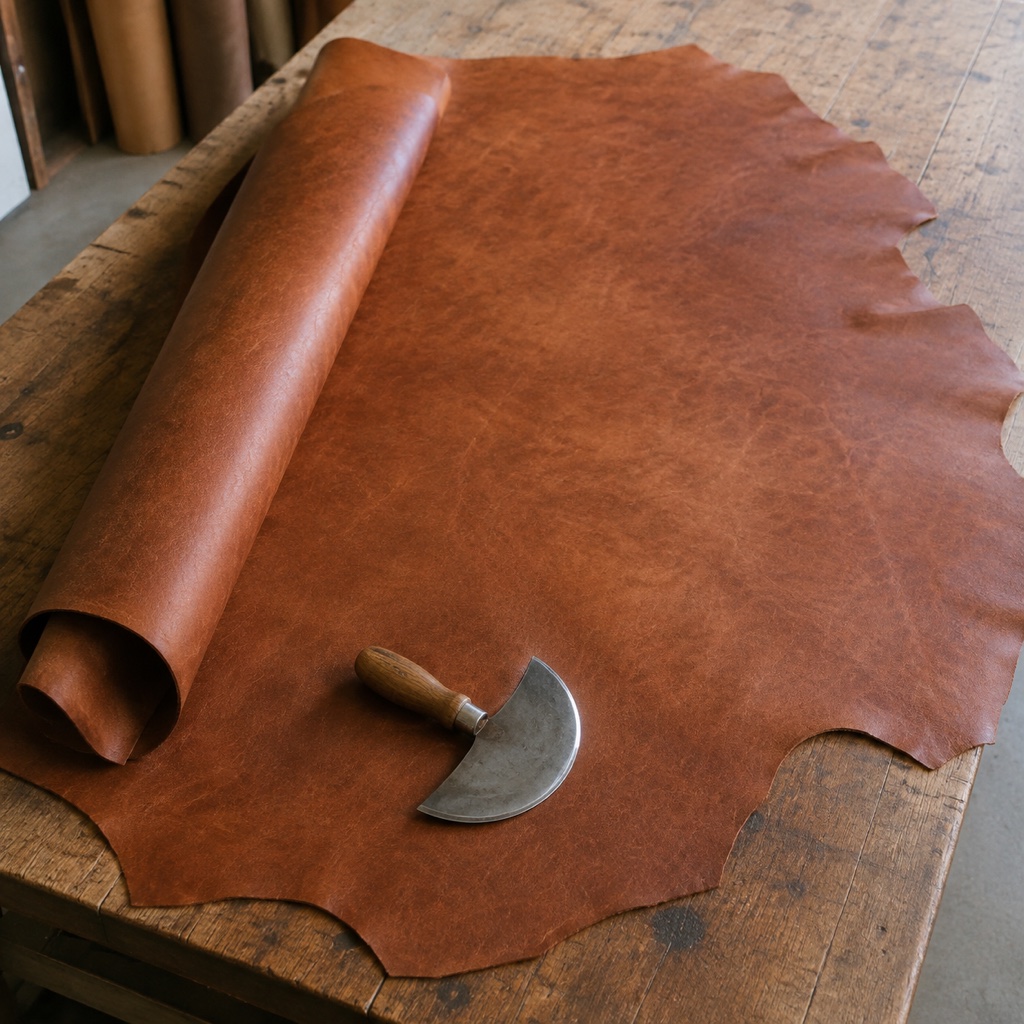 Full-grain, day zero
Hide
Full-grain means the top of the skin is left whole. Nothing is sanded off to hide a scar or a fold, so the pores, the tiny creases and the odd healed mark are all still there. That surface is the part that ages. Corrected leather is painted; this is not.
"We only use full grain. The best of the best."
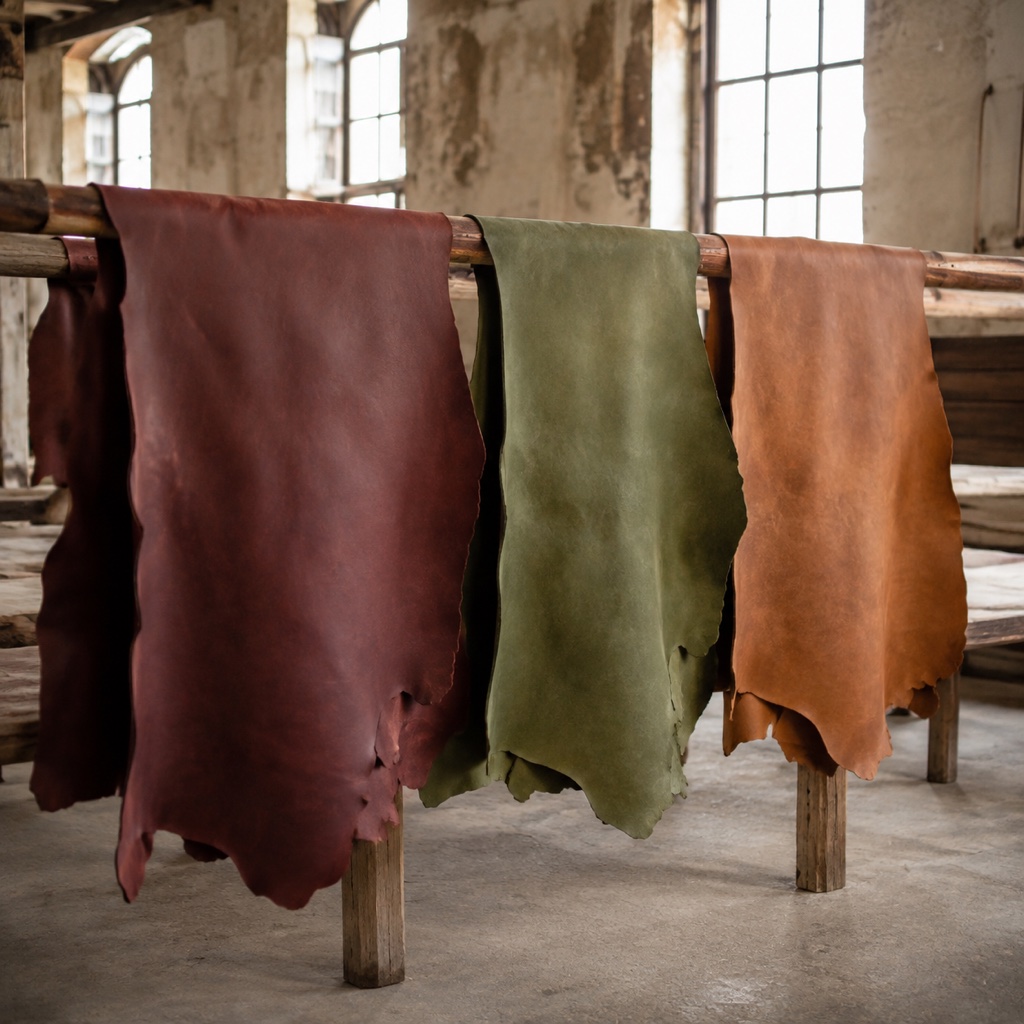 Vegetable-tanned in Italy
Tannery
Our hides are vegetable-tanned in Italy: soaked in tannins from bark and wood over weeks, not the hours a chrome tannage takes. It comes out firm, pale and faintly sweet-smelling, and it stays open to oil, light and heat for the rest of its life. That openness is why it darkens.
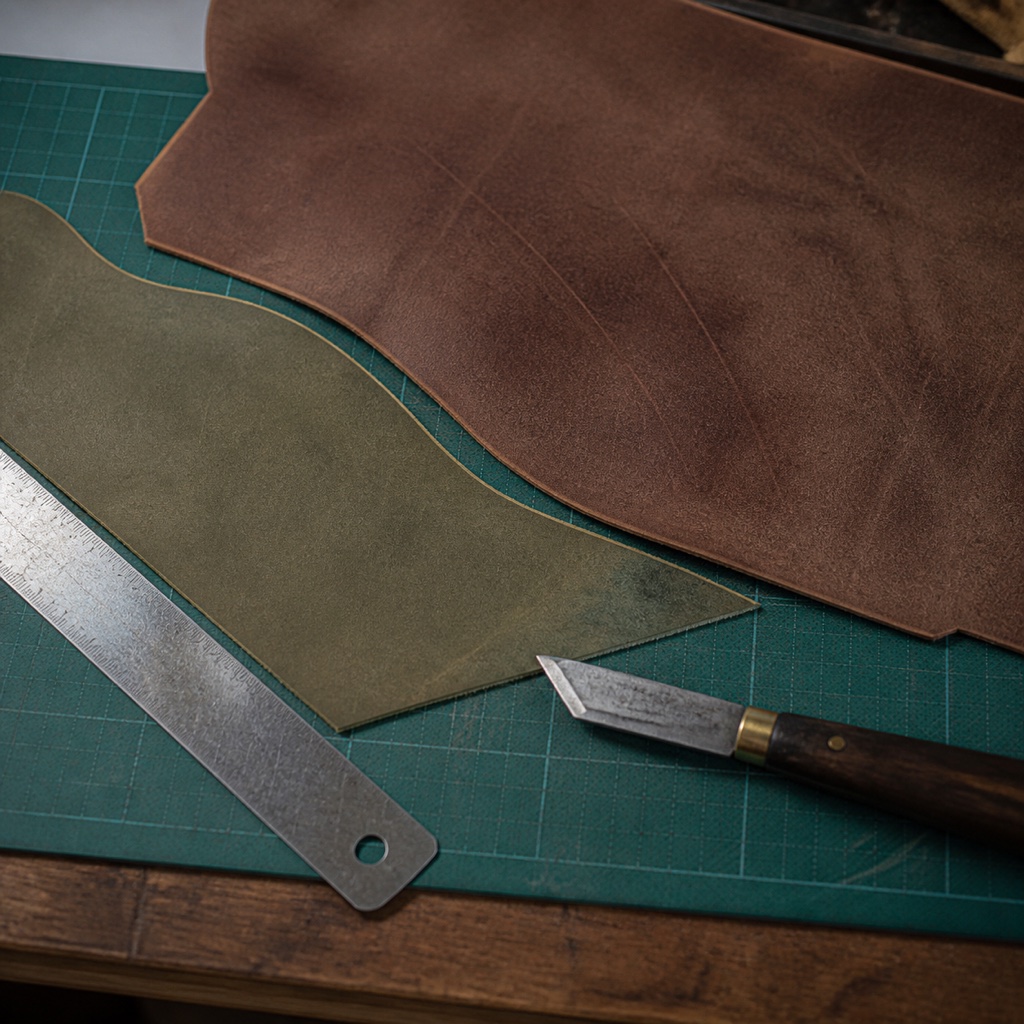 Cut by hand
Cut
Every piece is cut by hand from the tightest part of the hide. A bifold is one panel, so the fold is a fold and not a seam. A tote is one panel too, turned up at the base, which is why it has two seams and nothing else to fail.
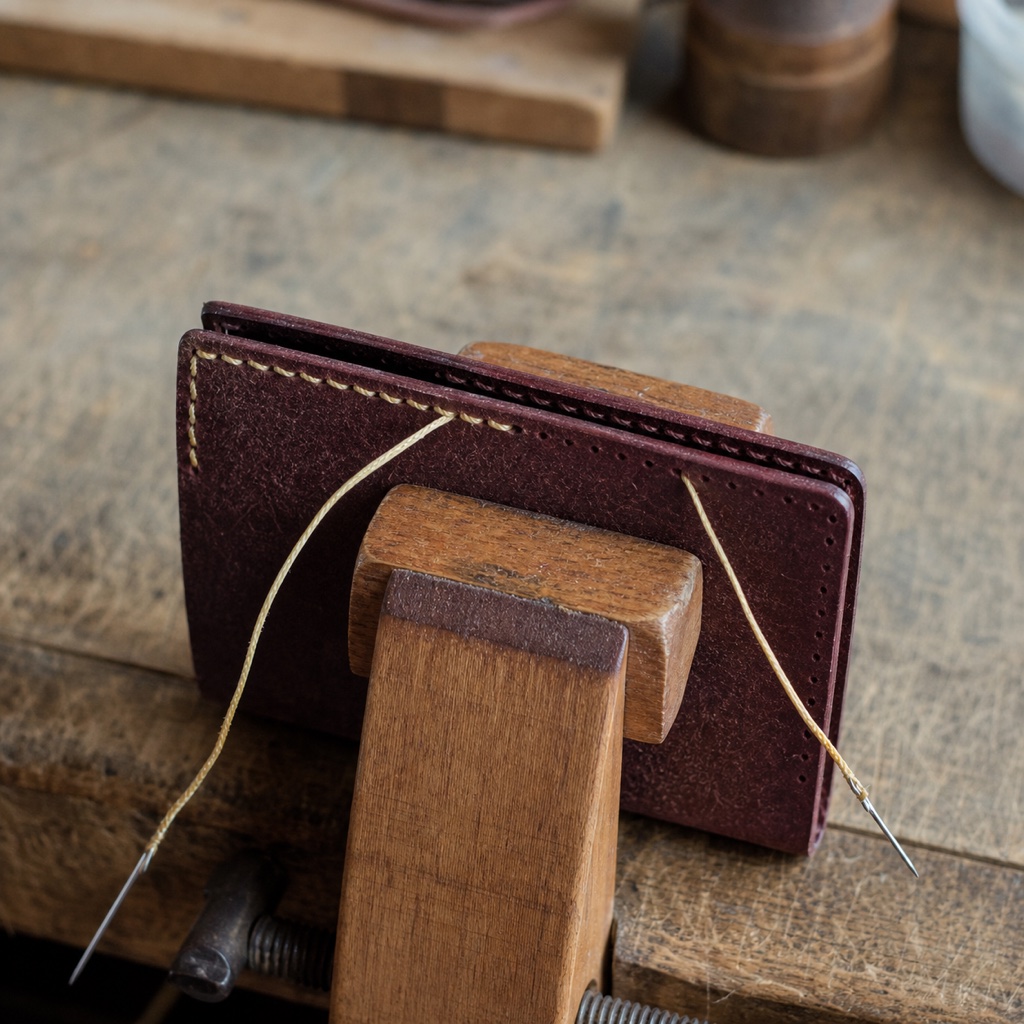 Saddle-stitched, waxed linen
Stitch
Saddle stitching uses two needles on one thread, passed through each hole from both sides. If a stitch ever wears through, the one next to it holds. A machine lock-stitch runs the other way. The thread is waxed linen, 0.6 mm on wallets and 0.8 mm on bags, and the edges are burnished by hand and sealed with beeswax.
Years
0
6 mo
2 y
5 y
10 y
How the leather darkens: new, then six months, two, five and ten years. Sun, oil and the warmth of a hand all get into the open surface and stay. Corners darken first, then the places your thumb rests. Nothing we make looks its best on the day it arrives.